

The page leads with the engine’s function and its connection to code. The explanation gives technical visitors a concrete claim to evaluate.

Case study — 02 AI coding infrastructure 2026
Syncora
Making shared project memory visible.
01 The mandate
Make the product legible.
Syncora’s website introduces memory orchestration for AI-assisted coding. It connects the product’s core claim to its working surfaces, giving engineers a clear starting point for evaluation.
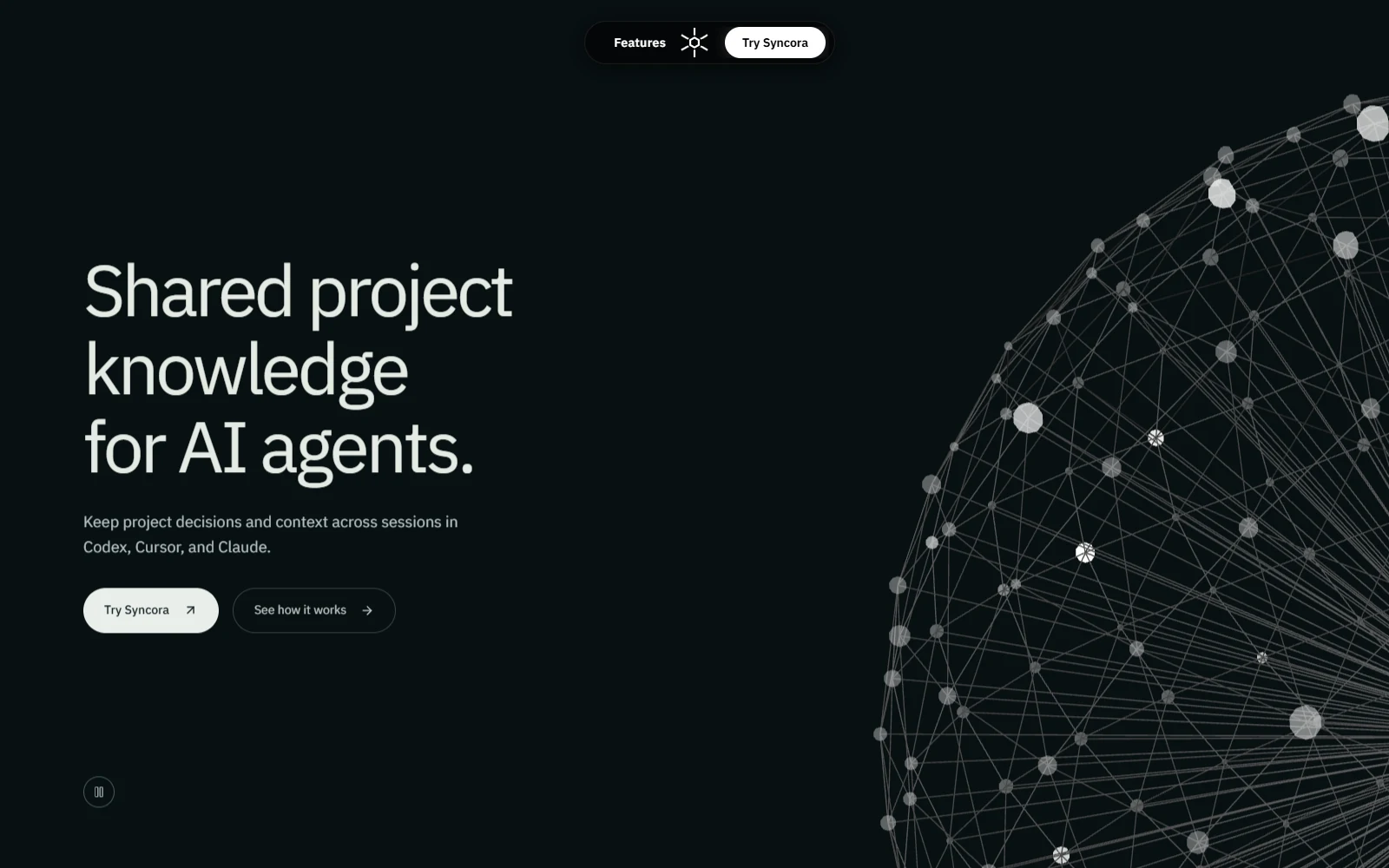
A direct headline and an oversized sphere introduce shared project memory before the technical detail.
02 The approach
Put the system in view.
The knowledge graph makes an abstract product visible. A restrained surrounding palette keeps attention on the connections and structure inside the product.
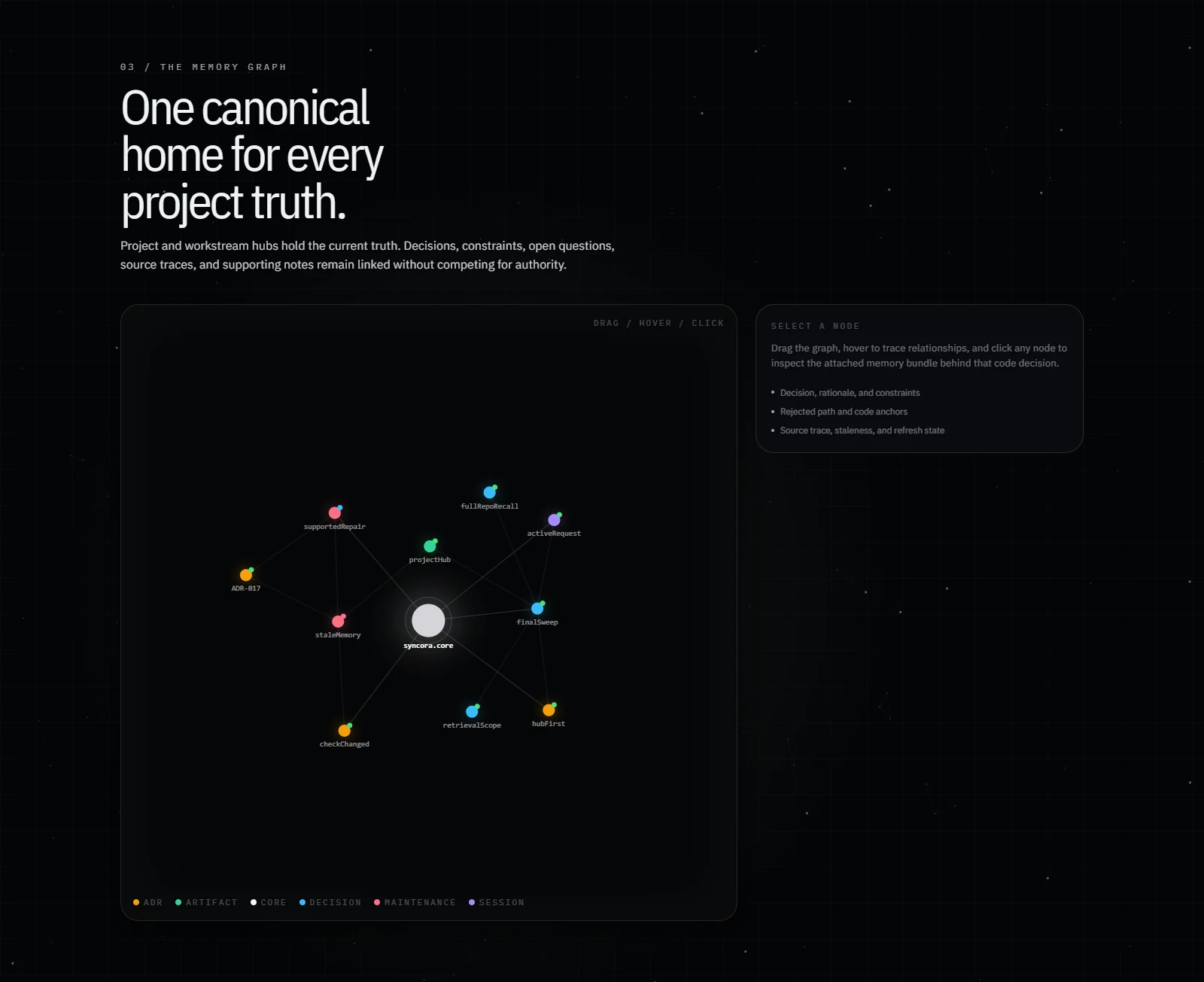
Colour separates the kinds of knowledge in the interactive memory graph.
03 The decisions
Clarity under inspection.
Deep green-black grounds and pale type frame the site. Colour marks graph categories and changes inside the demos.
Large product views connect the explanation to capture and maintenance. Short passages introduce each view without competing with the interface.
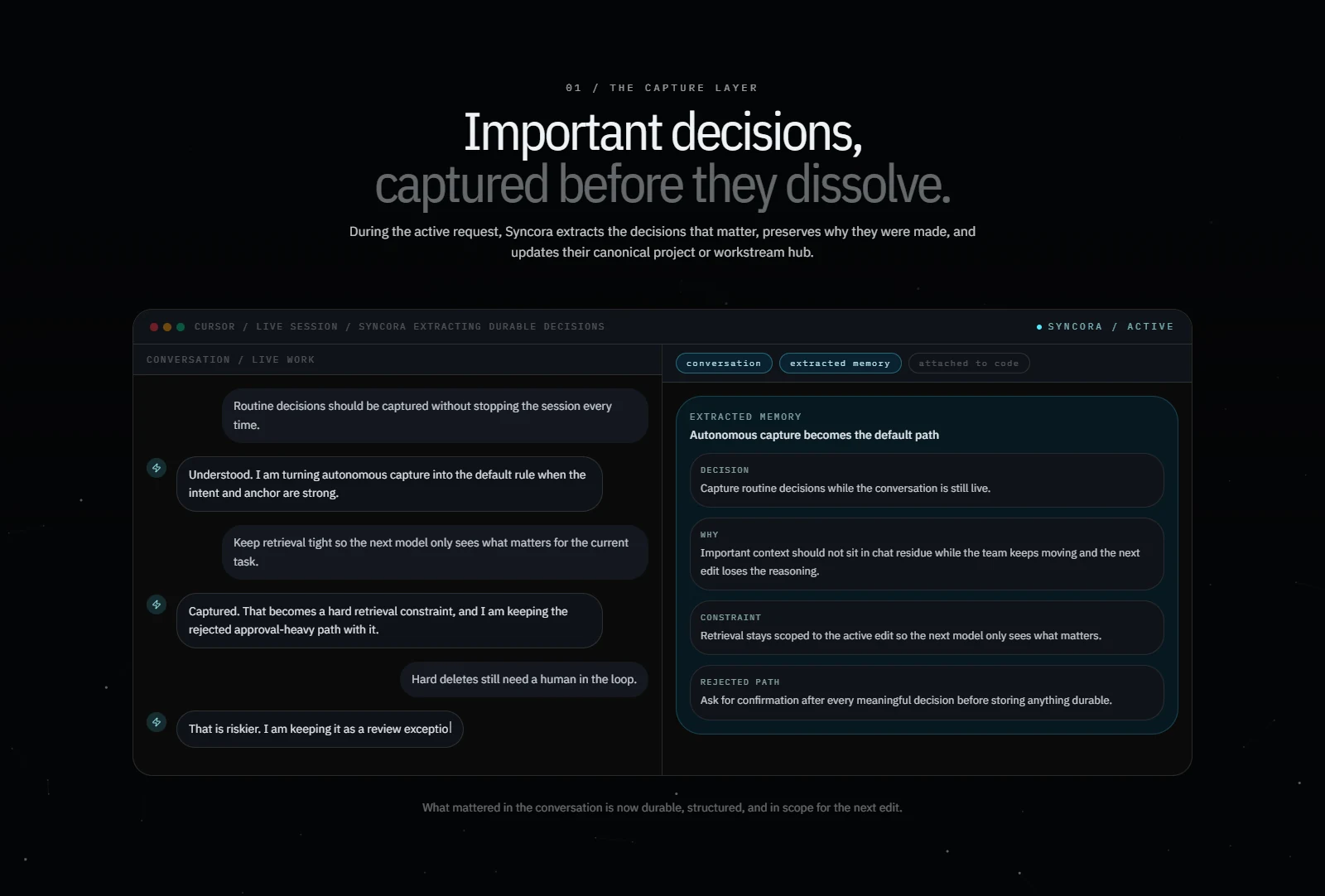
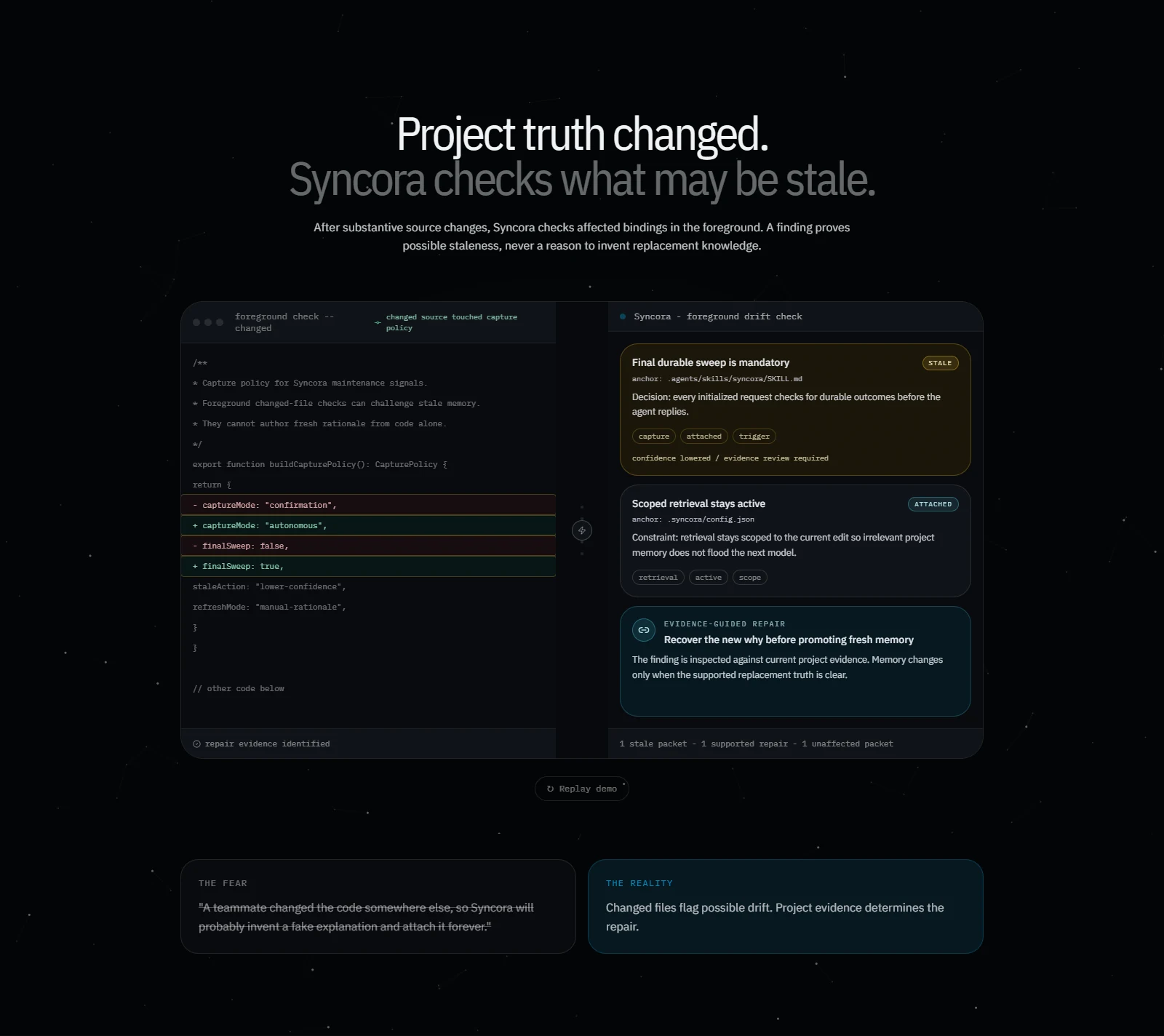
The product's working surfaces, shown the way an engineer would read them.
04 The evidence
From explanation to evaluation.
The live site brings the product narrative, graph and working surfaces together in one place.
What the build delivers
- Product understanding
- The product narrative connects memory orchestration to the working surfaces engineers can evaluate.
- Technical exploration
- Interactive graph visuals let visitors explore the relationships behind the product.
- A coherent presentation
- The product story, visual language, and interface examples live together on one website.